RAFTCRAFT
9 Months
Producer / Scrum Master / Audio / QA
6
Unreal | Github | Miro
Trailer
Overview
Raftcraft is 4-player online co-op adventure where goblins build a fragile makeshift vessel, hunt for loot across dangerous lands, and use their Mage Hands to grab, swing, pull, and thoroughly inconvenience each other.
I’m managing a six-person cross-functional team in developing it from concept to release. It’s set for release on December 10th on Steam.
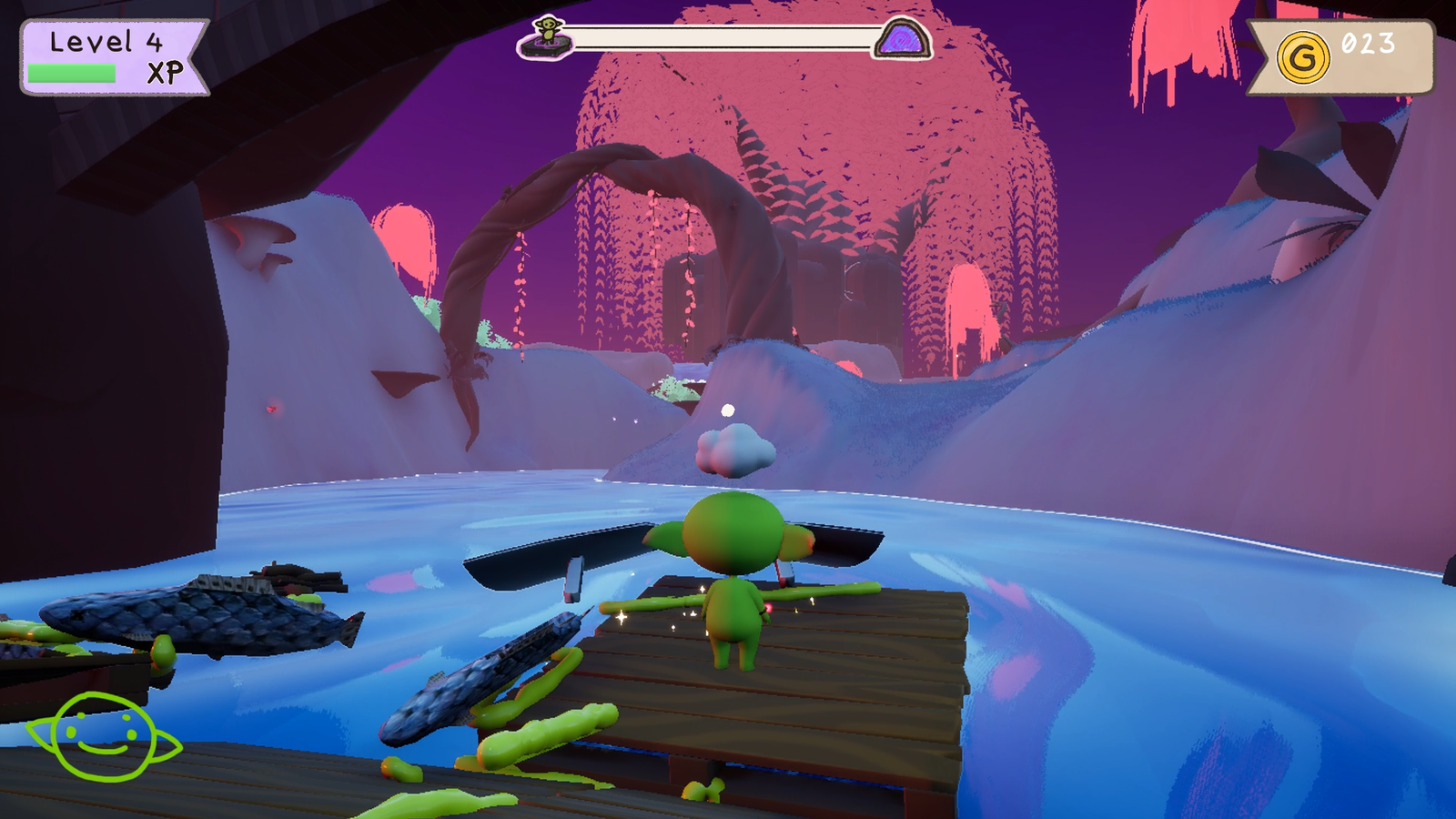
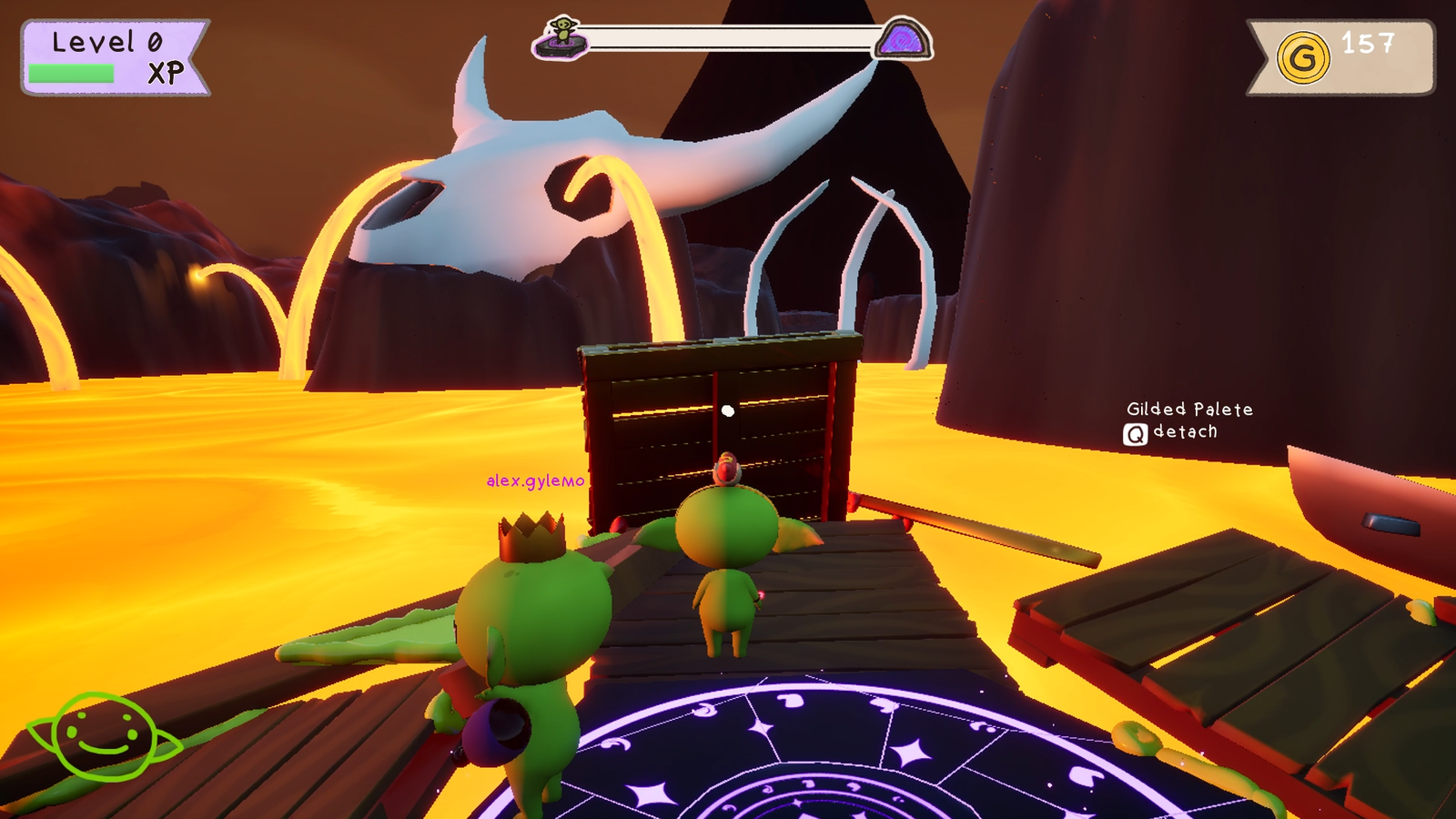
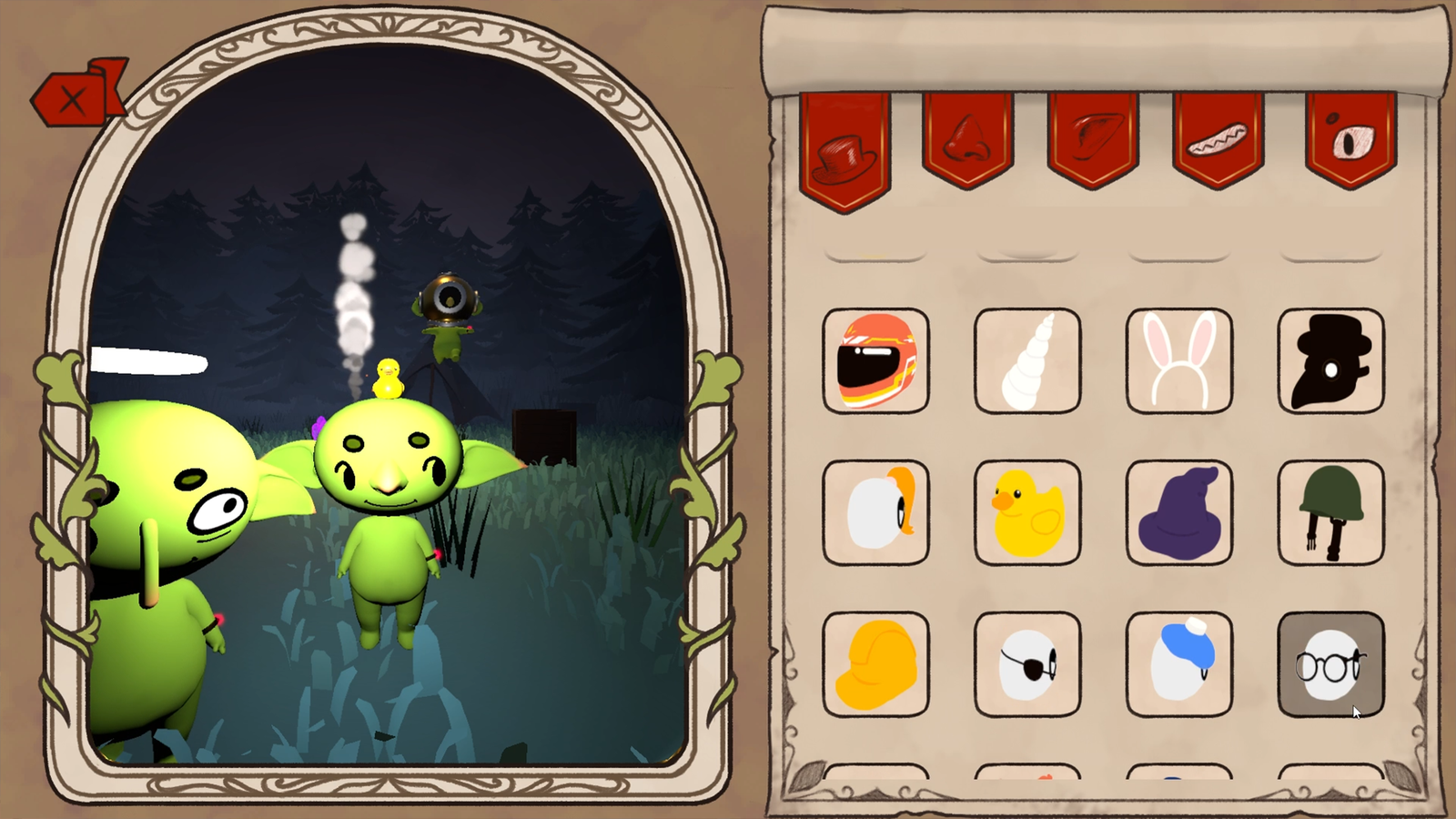
In-game screenshots
Responsibilities
- Project Roadmapping & Milestone Planning
- Scope & Resource Management
- Production Process & Workflow Development
- Risk & Dependency Tracking
- Feature Planning & Delivery Tracking
- Stakeholder Communication & Progress Reporting
- Product Positioning & Marketing Coordination
- Release Planning & Coordination
The examples below show how I put those responsibilities into practice when the game needed a new direction and when the release date changed:
Pivot 1: Simplifying the game loop
Our first prototype had players build a car together and drive it through a large, open level with environmental challenges along the way. Playtesters found it complex and unfocused.
Challenge: Finding a deliverable direction & Managing the production aftermath
Together with the Executive Producer and leads, we agreed that the game needed a tighter loop, which would require a major design pivot and a new production plan to support it. Issues could be boiled down to two key findings:
- Player freedom didn’t outweigh the lack of focus, and since open worlds need to be engaging, it would require a lot of resources for level design.
- It was a large risk for such a small team (with no level design specializations) to commit to huge level design work, as it would require sacrificing precious resources and time better put elsewhere.
- The content couldn’t sustain a fun sandbox. The standout moments were building a vehicle with friends and trying to survive the journey, but those moments were buried under less developed features.
- The state of the game and how thin-spread the team was risked overscoped sprints, blockers, and missing milestones. Committing the team to developing and polishing several weaker features instead of developing the highlights and streamlining was a huge gamble.
My approach & reasoning:
As the team had to decide on a new direction, I had two goals: cut the work while protecting the idea, and have us identify actual detractors and supporters without opinion bias. To achieve that, I summarized all the feedback we had from external and internal playtests into key insights and design flaws as above, and broke down the content we already had. Relying on data in the discussions gave us the means to reach decisions effectively while keeping both the new direction focused and the team happy. It also helped me assess production feasibility versus new creative targets more easily, and I had more freedom to trim the scope knowing the team was in agreement.
We kept cooperative vehicle building and survival, but replaced free navigation with a forward-moving river. I assigned the designer with the most experience from our previous level design to cut up the large map and remake the strongest sections into level chunks, so the new level design could be constituted by randomized map chunks.
Result:
I presented a revised milestone plan and backlog to management that same week, and the team could start work immediately with clear ownership and a narrower scope. While the scope was smaller, reusing level assets more creatively instead of using a larger but more stale world had testers reporting that the game felt more varied and engaging.
Pivot 2.1: Release Replan
When the core gameplay loop had been realized, management wanted us to launch two months earlier than originally planned. That cut our planned production window from nine months to seven. I had to revisit the milestone plan, the sprint backlog, and the work already underway to see where the game would suffer the least from a major cut.
Challenge: Major cutting without sacrificing the game
Three biomes were planned for launch, and the team had concluded that an engaging biome required bespoke level chunks, obstacles, props, vehicle parts, and mechanics. At that time, development of two biomes was fully underway, and keeping the third, less developed, one would sacrifice polishing and iteration.
- Since committing the team to all biomes wouldn’t leave enough time for testing, iteration, and polish, I had to find a way to free up resources.
My approach & reasoning:
Together with the leads, I compared the three biomes by what they offered players, the uniqueness of their identities, and how much work stood between the designs and a playable build, and recommended cutting the least realized biome. While this gave us more time to achieve an overall polished game, the main challenge with this pivot was to retain team morale. A lot of planning and hard work had gone into the now-cut biome, and the team had been excited to implement it. To minimize resource waste, I reviewed the biome’s content and proposed that we adapt anything that fit one of the remaining biomes.
Result:
Repurposing instead of cutting not only softened the morale blow and gave our sprints more breathing room, but thanks to infusing parts from the cut biome, such as obstacles and chunk designs, playtesting proved that it also raised the quality of the remaining biomes.
Pivot 2.2: Rescope when the original release date returned
The earlier release date put us in a riskier launch window and left less time for marketing, so management eventually reinstated the original date. I had to decide whether to use the time we got back to polish or bring back the biome we’d cut in Pivot 2.1, as the team was excited to build it.
Challenge: Opening up the scope without risking polish
By then, the core loop was working well in playtests, and most of the remaining work was bug fixing and optimization. A third biome would add variety, but it still had to meet the same standard as the other two. My default was to keep the existing scope unless we could show that the biome was viable without reopening the rest of the game.
- Bringing back the biome as originally planned would risk committing people to new work late in development, before we knew how long it would take.
My approach & reasoning:
After discussing what standard the biome needed to be brought in, I asked the team to pitch a smaller version of the biome and laid out what I needed to see before I’d put it back in scope:
- Content and gameplay logic that could be reused, and what had to be built from scratch
- What other work would have to be deprioritized
- How long it would take to get to a testable prototype, and required polish time
- What could be scaled back if becoming too costly
When we cut the third biome, I’d proposed adapting anything useful from it for the other two. The team’s pitch applied the same thinking in reverse, and identified which assets needed to be made from scratch to make the biome distinct. A smaller team would build on existing chunks and gameplay logic, mirroring layouts and swapping props where it made sense.
I adjusted the proposed scope to minimize what needed to be built from scratch and pitched a two-man pod taking one week to prototype the biome to the Executive Producer, while the rest of the team kept polishing. The goal was to test the bigger additions before committing more time, so we could see what was fun, what was feasible, and what we could adjust or cut.
Result:
Once it was greenlit, the pod worked effectively within my very strict scope and managed to hit the requirements so that the Executive Producer and I could approve continued production at the end of that week, as it would only require the artist to add new textures while the rest of the team could continue polishing in parallel. Ultimately, through a low-risk plan with clear definition-of-dones and requirements, we managed to add a third more content without pulling too many resources from polish.
What I learned
Being Raftcraft’s producer has formed me into a reliable link between development and management, by teaching me how to balance business goals with creative vision, and ensuring management decisions are understood and supported by the team while their perspectives are heard. It has also made me effective and transparent in reporting progress and risks to management, aligning milestones, and facilitating knowledge-sharing and openness between disciplines, teams, and stakeholders.