Galdr: Forgotten Songs
4 Weeks
Product Owner / Gameplay Design / Level Design
13
Unity | Jira | Miro | Perforce
Trailer
Overview
Galdr (Old Norse for “song” or “incantation”) is a puzzle adventure where the player uses a semi-modular music system in the form of a magical flute to solve environmental puzzles. I was part of a very passionate team where our toughest, but rewarding, challenge was aligning our aspirations for the game experience. As the PO, I put a lot of effort into getting the team aligned and reducing friction through transparent discussions and cross-craft collaboration.
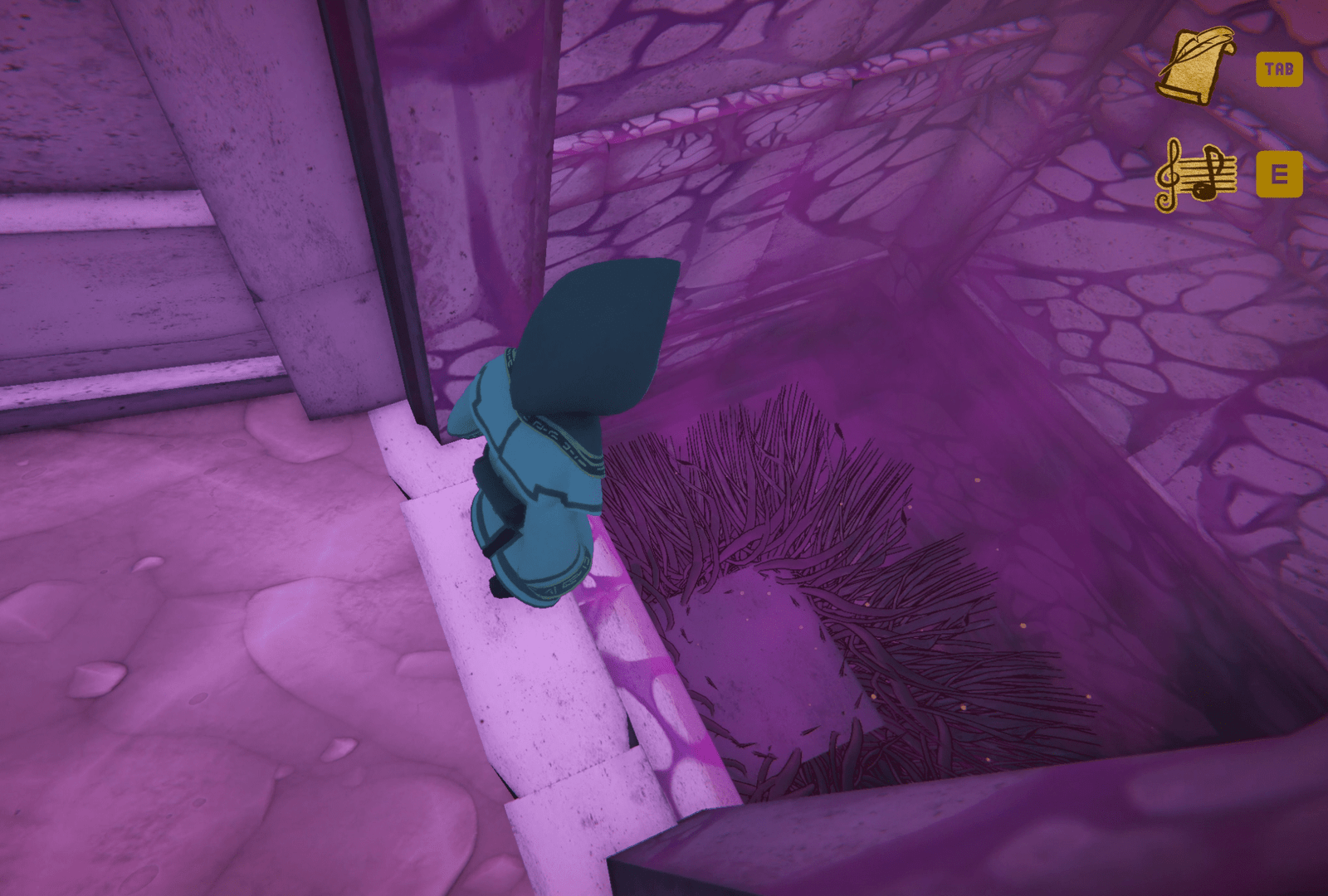
In-game screenshots
Responsibilities
My main role for the project was Product Owner, as well as Gameplay and Level Designer, conceptualizing and co-designing the magical flute mechanic, Song/spell effects, and the objects they affect, and creating the tutorial level.
Product Owner
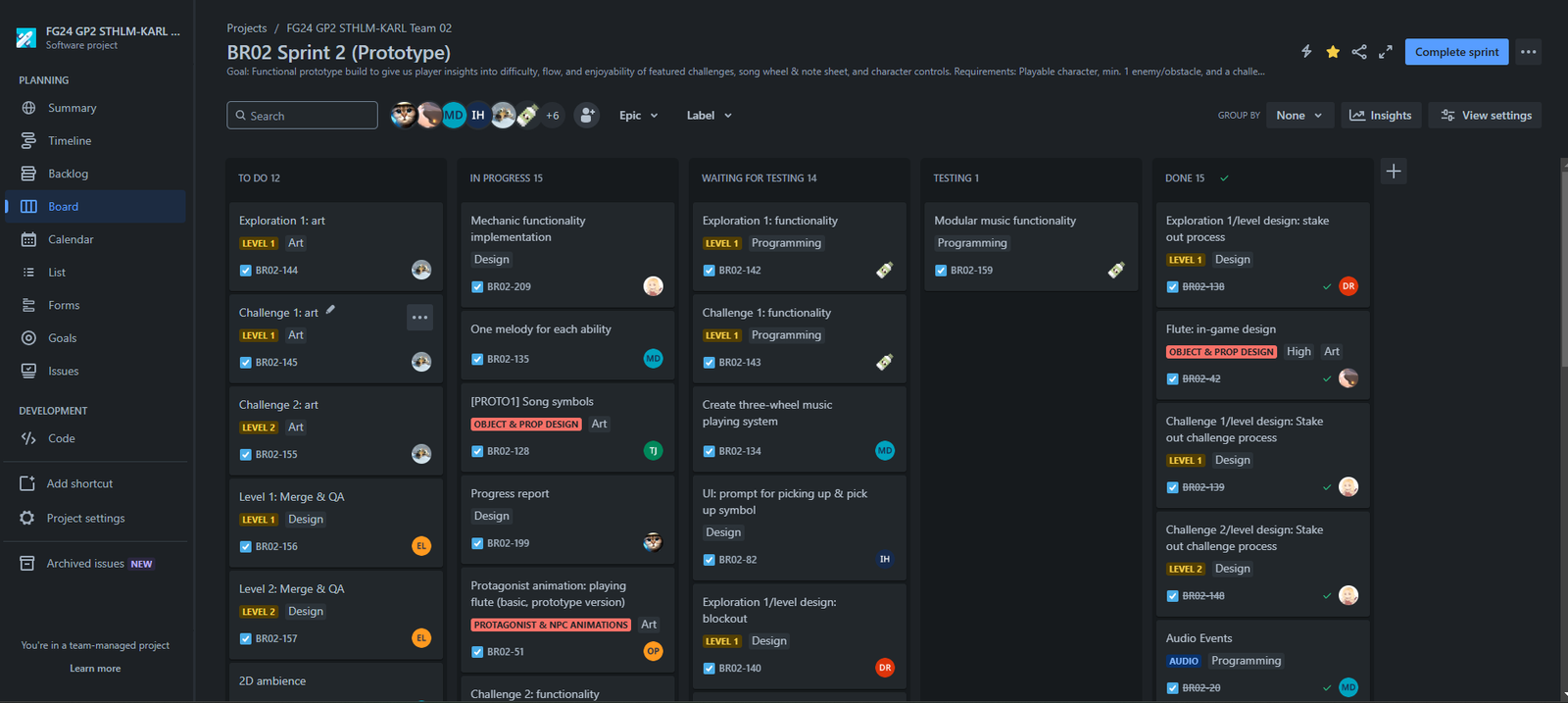
I structured our workflows, wrote the team contract, and built our Jira setup with clear sprints and ownership. With the Scrum Master absent, I maintained the GDD as our single source of truth and, with our Scrum Master absent, facilitated all ceremonies.
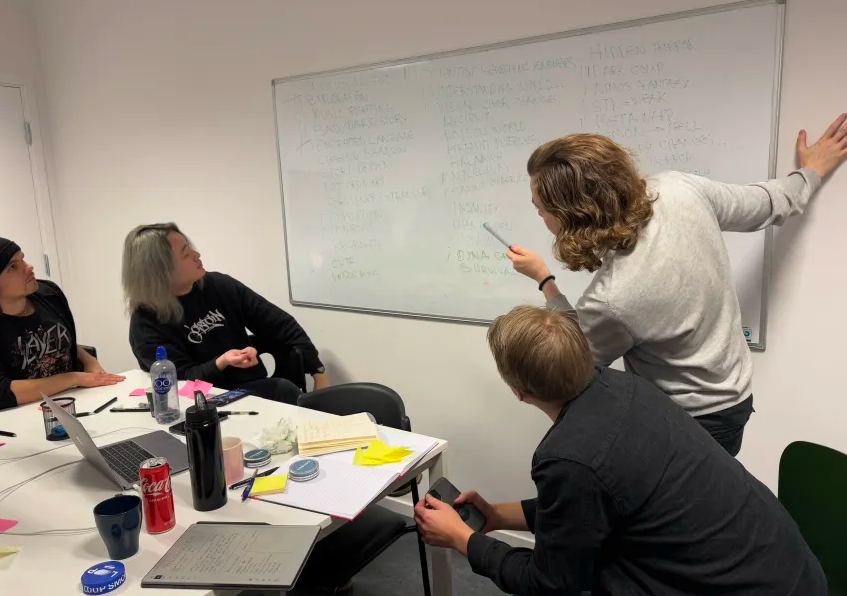
When our ambitions led to design drifts and feature creep, I held alignment meetings, resolved personal friction, and issued cut lists based on player value vs. development cost. This stabilised our collaboration and brought the project back to a deliverable scope.
The biggest challenges came from being an ambitious team with many competing ideas. By opening design decisions to everyone early in development, I unintentionally created a “too many chefs” situation that slowed decision-making and overscoped the project. To fix it, I facilitated targeted meetings to resolve collaboration issues and align the team, and issued two cut lists with lean alternatives to refocus the project. Communicating these decisions transparently helped maintain morale and efficiency until delivery.
Gameplay Design
I co-designed and iterated on the core gameplay loop built around our music system. Together with the design lead and programmer, we designed a modular “song-as-spell” mechanic (inspired by Ocarina of Time and FF7 Rebirth).
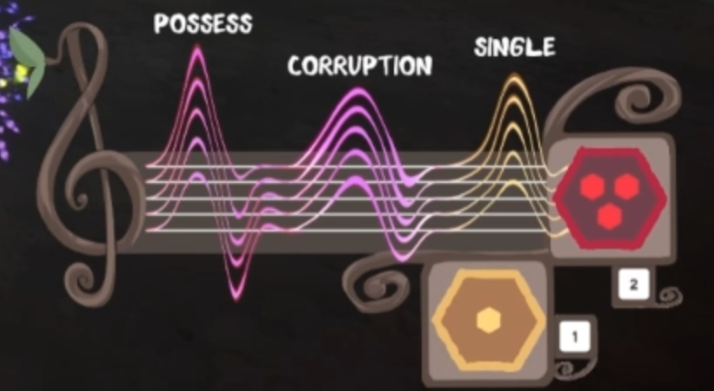
Our goal was to use music as an alternative to spellcasting and to encourage experimentation. This required us to carefully condense abilities to eliminate overlap and keep the system intuitive. For example, the “Alter” song lets the player raise, lower, rotate, or scale world objects depending on which melody modules they play while targeting certain objects.
The first iteration let players control individual notes to form spell sequences (similar to fighting game combos), but playtests showed it was overwhelming. Based on that, I led a redesign session shifting the system to module-based inputs, which made the system more accessible without losing too much of the creative depth.
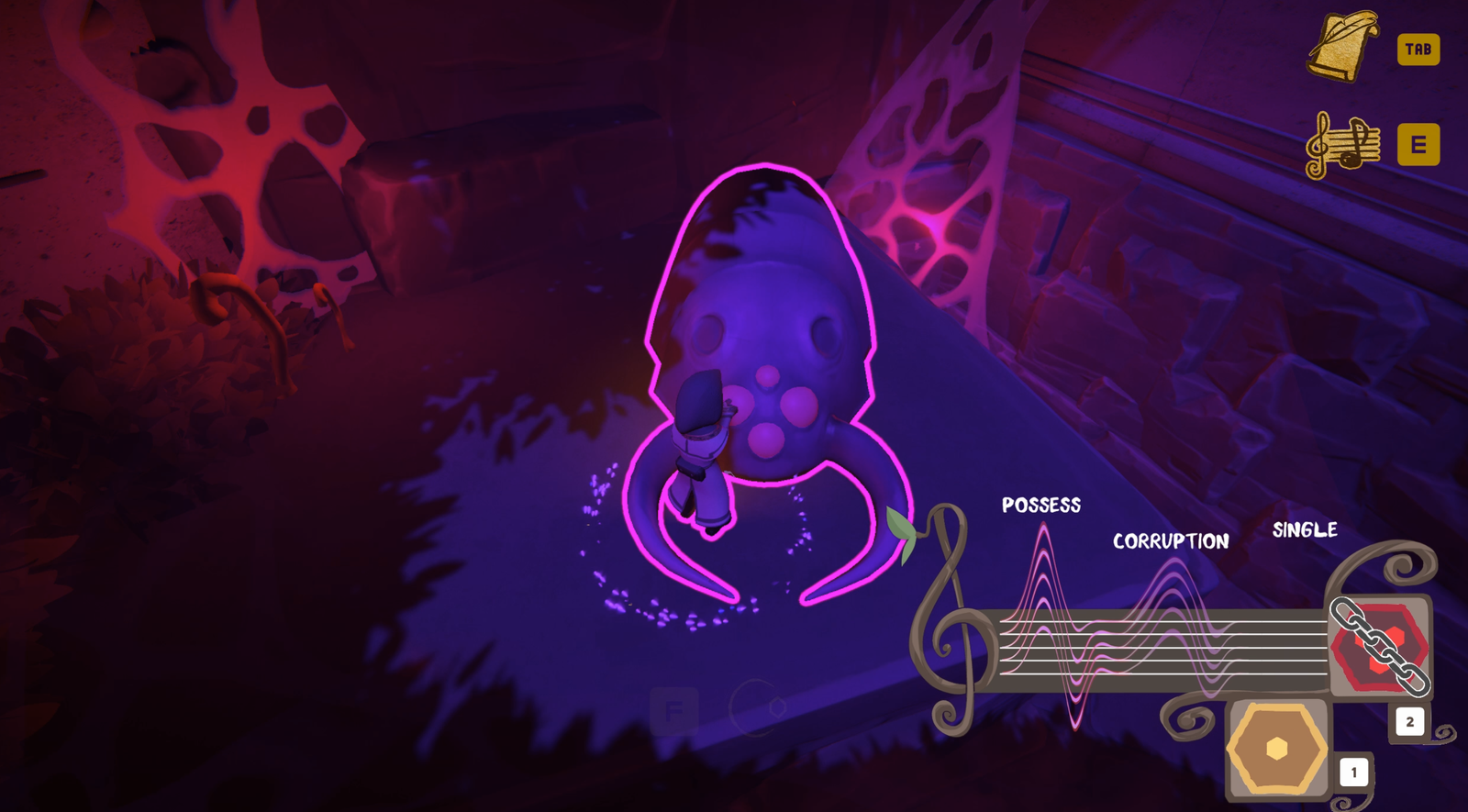
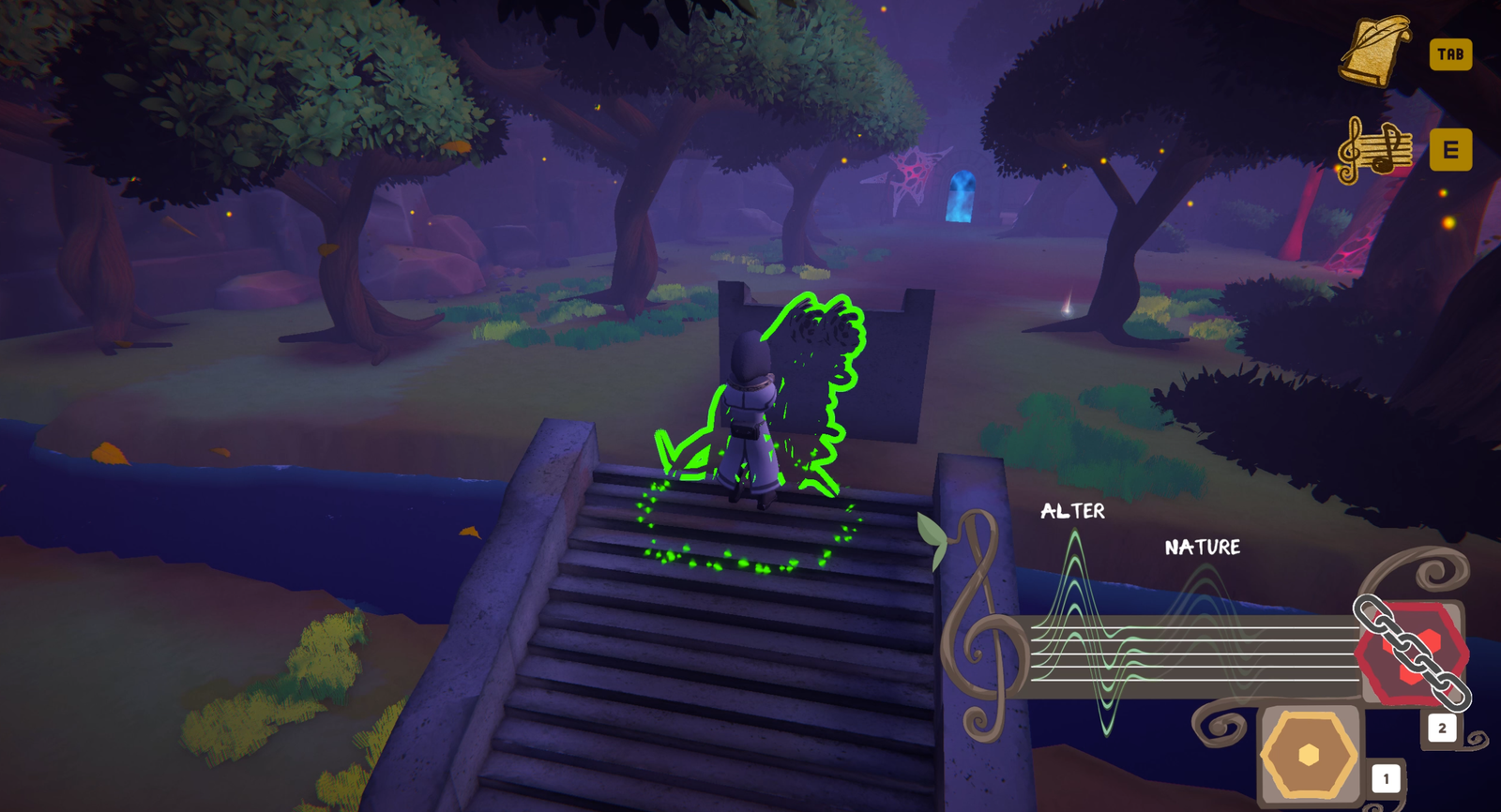
Music system (release build)
In-depth: Spell & Enemy Design
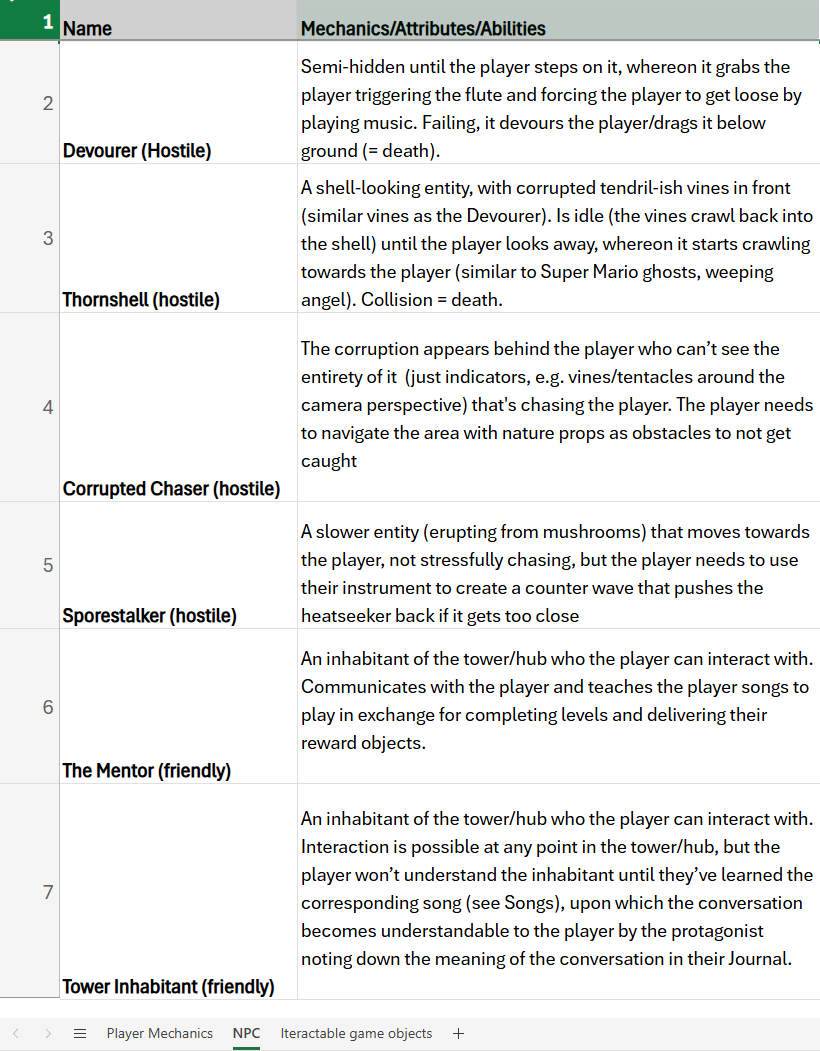
I also co-designed the spell and enemy systems, defining Song/Spell effects and their usability areas, and enemy abilities. Avoiding ability/utility overlap was the main challenge for both Songs and enemies. We solved it by condensing the variety so that the ones remaining felt unique.
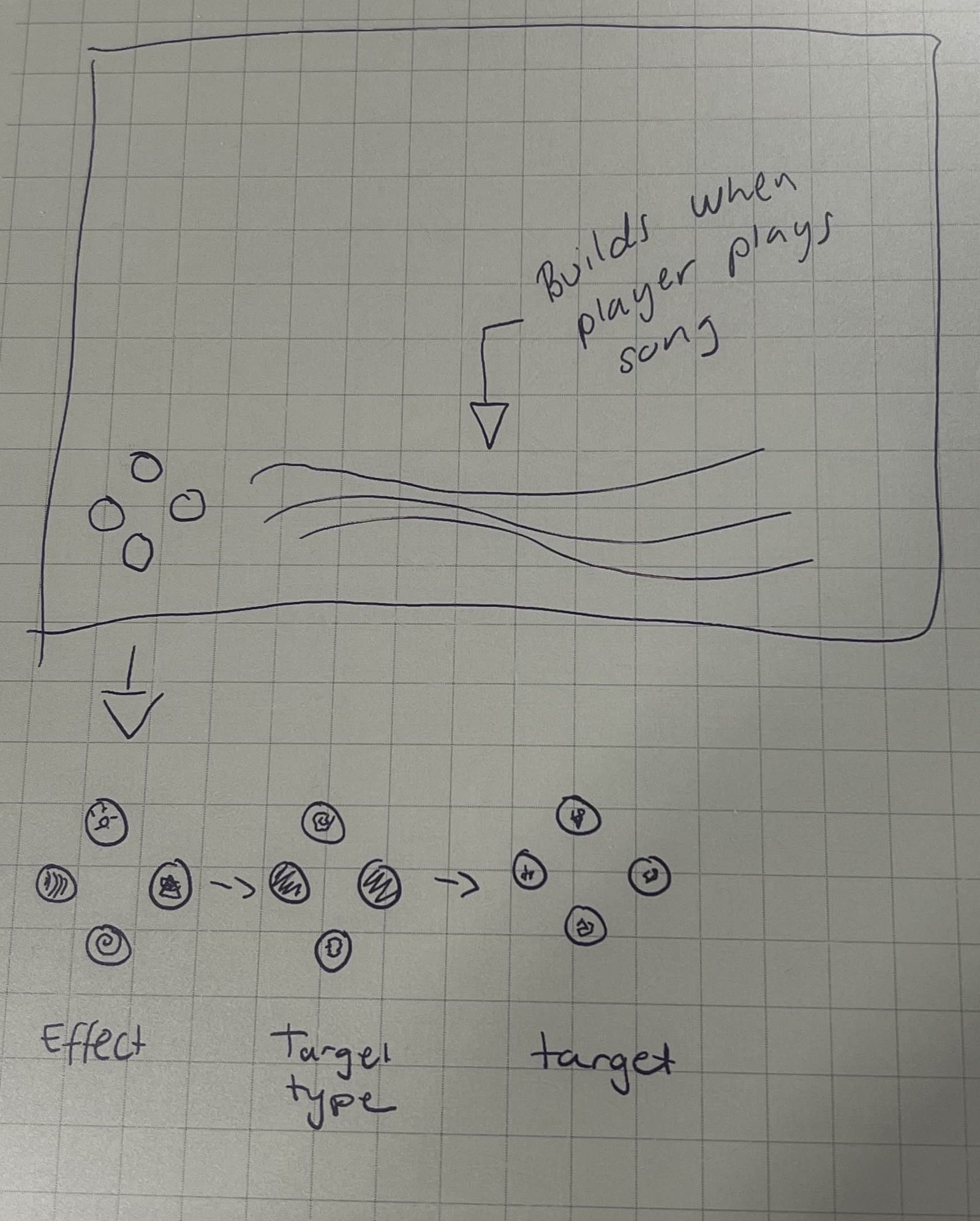
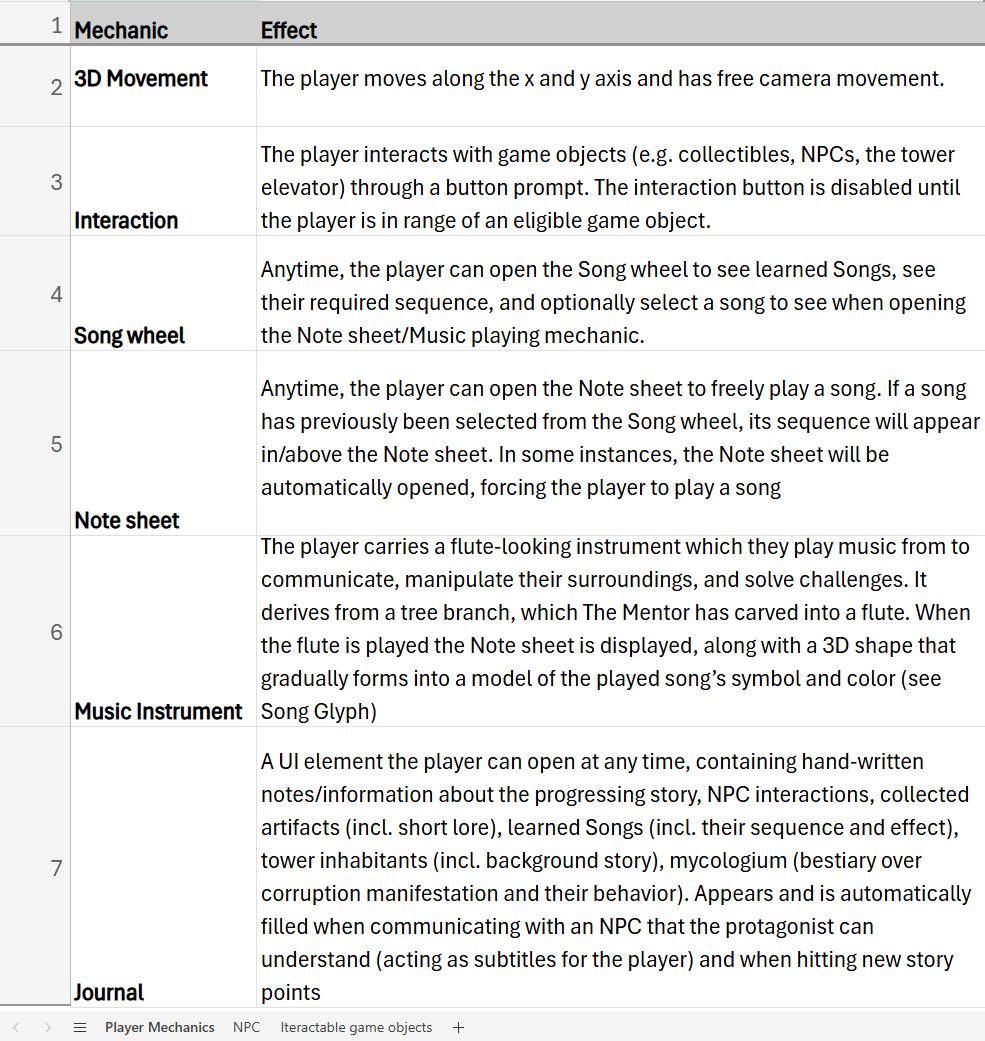
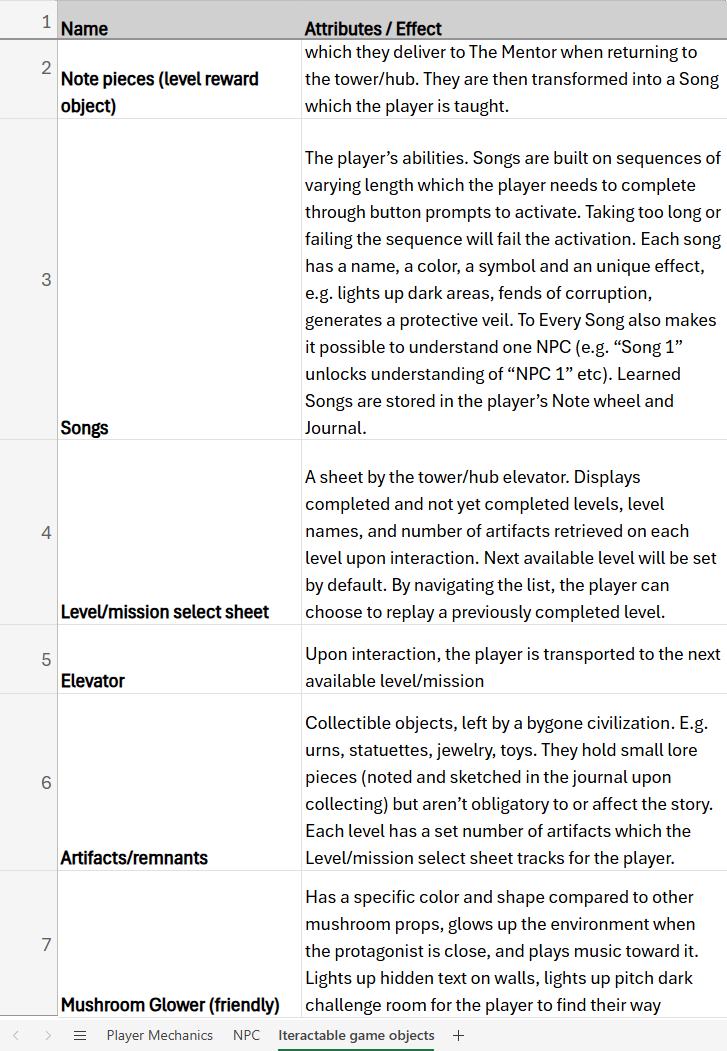
Exerts from the GDD
In-depth: HUD Rework
Music HUD (release build)
To reduce clutter and support faster gameplay, I redesigned the HUD by moving it to the bottom right, matching icons to controller layout, and adding clearer color coding and visual feedback for inputs. I also added outlines on manipulative objects for easier targeting. Original vs. rework design on slide 7 below.
Exerts from my internal pitch deck for the rework
Level Design
According to playtesters, the game lacked proper onboarding for using Songs and had unbalanced puzzle pacing, resulting in an overall disconnected experience. Since I had been deeply involved with the game’s vision, core elements, and world-building, I created the first level to make the player comfortable using the flute and set the world’s tone.
Since the player had only unlocked the “Alter” Song at this stage, the main challenge was to create an engaging level without getting too repetitive or difficult. I decided to go for “intriguing” to demonstrate all the ways the Song could affect the environment. I made the level from conceptualization to a finished greybox, and guided the set dressing. After getting feedback that the level felt “too walky”, I added more, smaller puzzles to make it more dynamic and further showcase Song versatility.
Design process
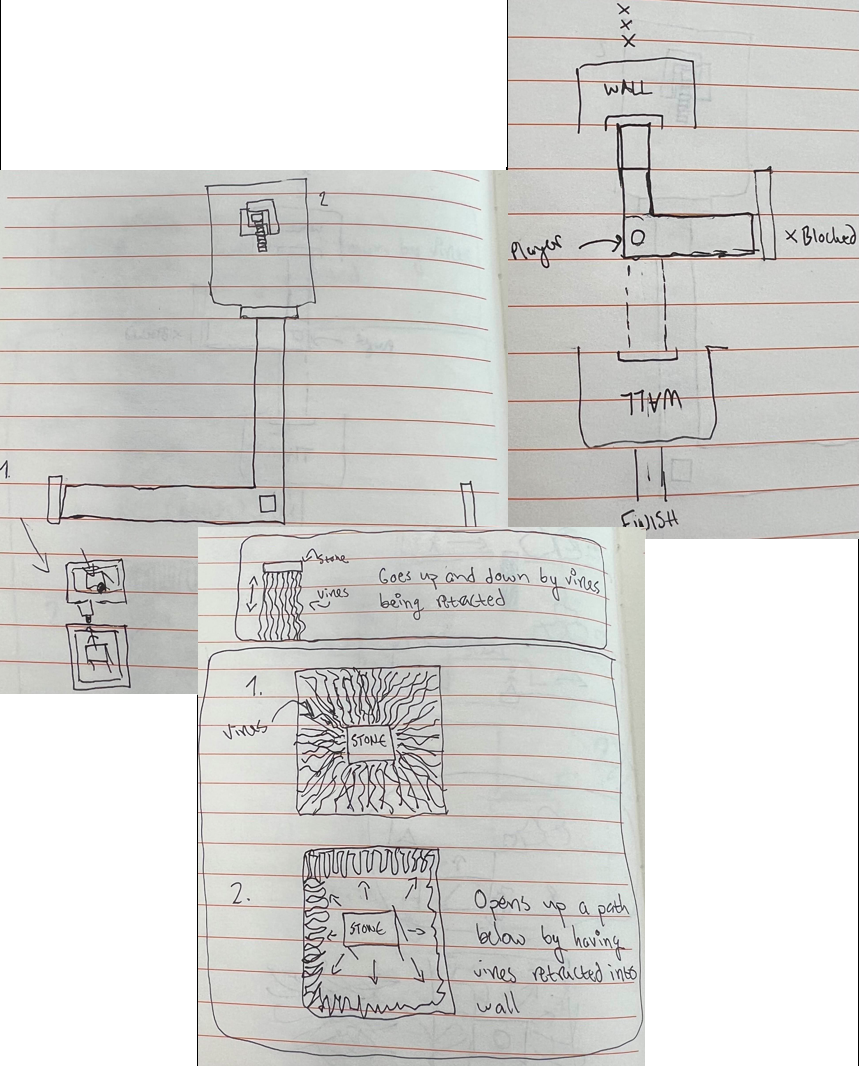
Based on the key criticisms, I wrote a list of suitable scenarios for the tutorial level, while sketching key parts and how they could be presented in-game. Design ideas had to be restricted, as the player only had access to one Song and walking. We also didn’t want to introduce hostile NPCs this early in the game.
I focused on further developing the ideas that felt most “epic” and had world-building impact, without challenging the player too much mechanically.
My goal with the scenarios was atmosphere and feel with light puzzles that demonstrate how the “Alter” Song could be used.
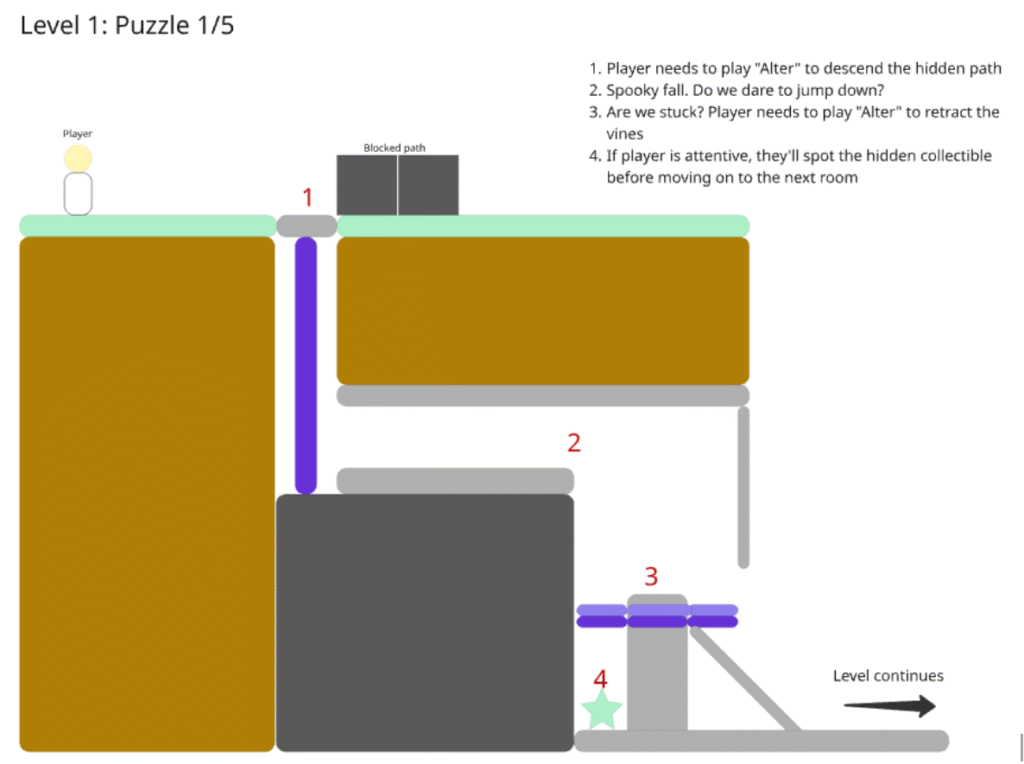
When I had enough ideas, I made more detailed sketches in Miro, divided into larger puzzle areas. These consisted of 4-5 steps that the player had to get through to advance to the next puzzle area, using pattern recognition, memory, and the versatility of “Alter”.
Miro sketch
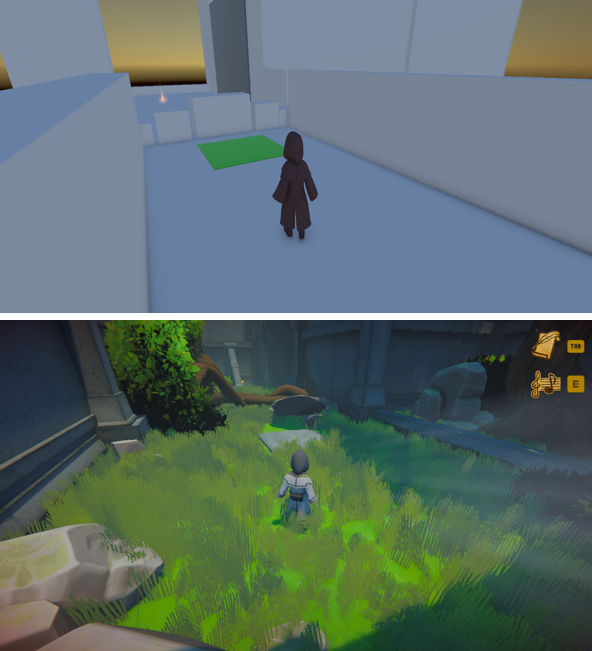
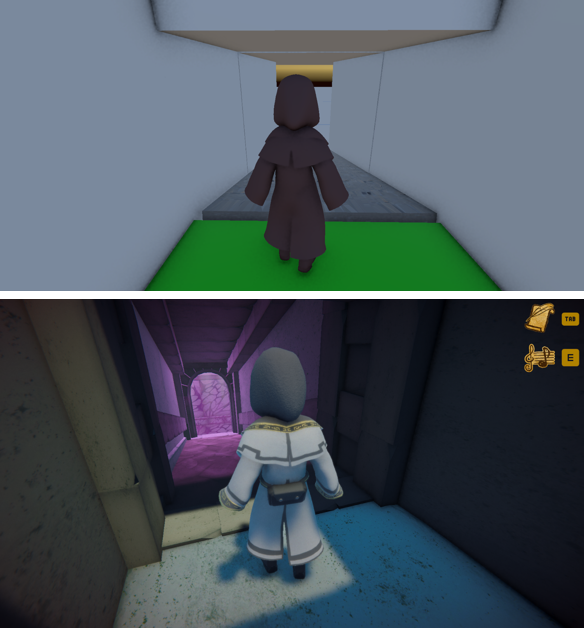
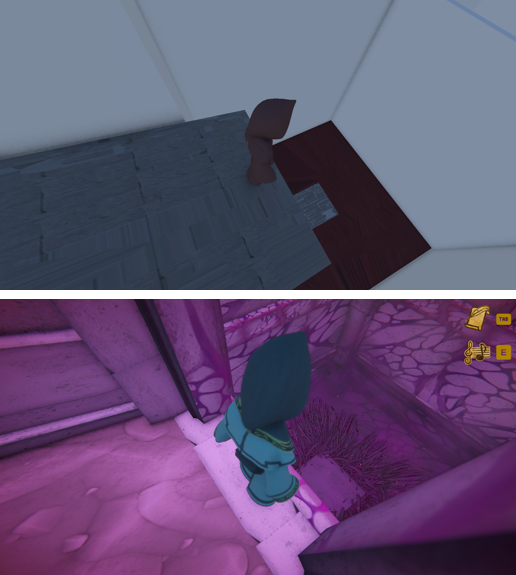
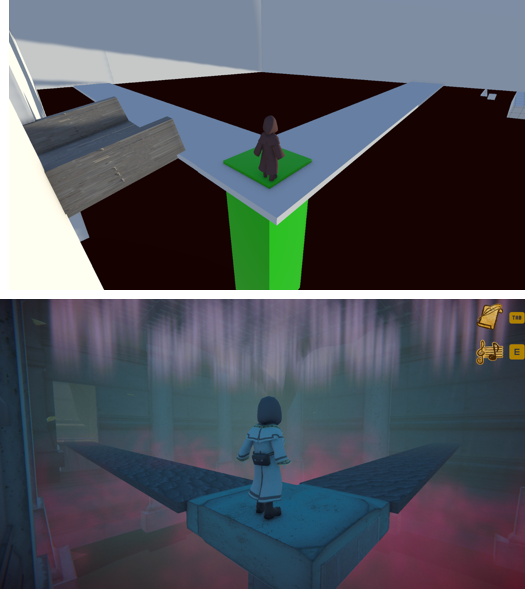
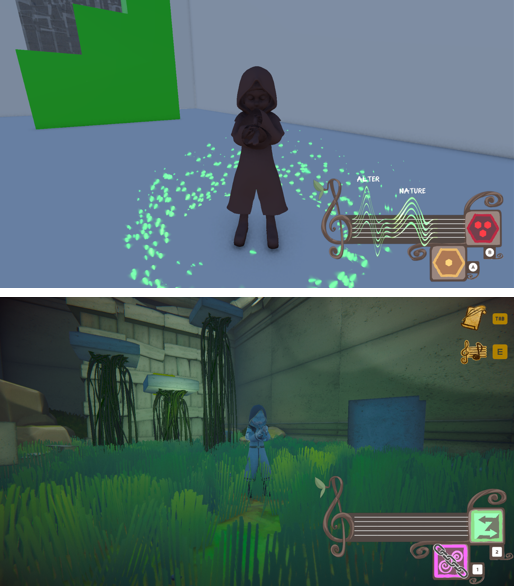
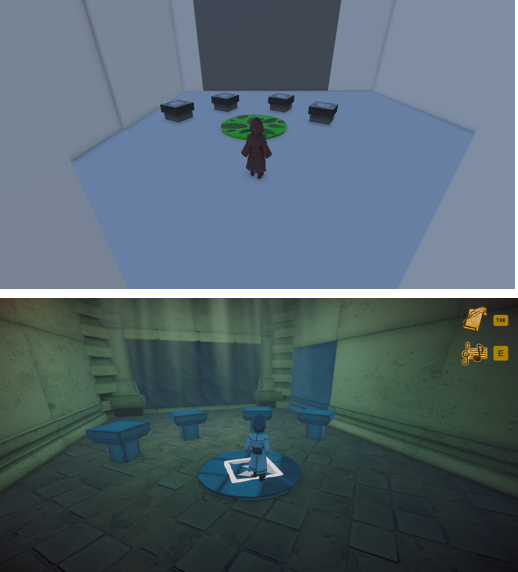
After it had been cleared with the design lead, I started greyboxing the level. It went through multiple iterations to enhance the visual guidance and balance pacing between puzzles and worldbuilding. Most rooms had to be scaled up in size to achieve the experience I had intended.
Greybox vs. release build
What I learned
This project really challenged me in balancing creative ownership with production discipline. As PO and designer, I had to switch perspectives quickly to not get caught up in all the cool ideas the team and I came up with. I learned the importance of clear cross-craft communication and of protecting scope early to avoid overshooting deadlines, which sharpened my communication and leadership skills. Stepping in for the Scrum Master role made me stronger at stabilising teams under pressure through structured communication and documentation.
On the design side, designing the Music Maker system, reworking the HUD, and creating the tutorial level was great for my UX skills and showed how important it is to iterate for clarity and that readability and pacing usually matter more than complexity.
Overall, I strengthened my ability to bridge design and production, and I became stronger in ensuring progress without losing creative intent.